Fraud Alert

Cloud and SaaS Application
Support After Go-Live

Incident, version and user support for live cloud and SaaS apps, 9am to 1pm Eastern, with delivery from India. A named team owns your tickets, escalations and releases on AWS or Azure, so your engineers get back to building the product. The tiers, the window and the quote are agreed before support starts.


150+ clients 450+ projects 275+ engineers 15+ years
Cloud and SaaS application support after go-live, Vervali
ISO/IEC 17025:2017 testing laboratory accreditation mark

ISO/IEC 17025:2017Accredited testing laboratory
CMMI Maturity Level 3 process award

CMMI Maturity Level 3The process is written down and repeats

ISO 9001:2015 quality management certification mark

ISO 9001:2015Quality management

ISO/IEC 27001 information security certification mark

ISO/IEC 27001Information security

Incidents, Users and Releases

Support for the live product, so outages get owned and fixed instead of piling up in a queue.

Incident Response

A named owner triages, fixes or escalates each incident, with a clear path when something is down.

Tiered User Support

L1, L2 and L3 support for your customers and internal users, using the tiers you choose.

Releases and Versions

Releases land on a live SaaS product with compatibility checks and a tested rollback plan.

Application Monitoring

Errors, slow paths and tenant issues caught early in CloudWatch, Azure Monitor or your own tools.

When the app breaks at peak hours, your customers should not be the first to notice.

Book a Discovery Call

Support Models That Fit Your Team

Hand over as much of the support desk as you need, and keep the rest in house.

Dedicated Support

A full team runs every tier for your product, with one owner accountable for the service.

Co-Managed Support

We work alongside your engineers, taking agreed tiers, products or hours off their plate.

Single-Tier Support

Hand over only L1 or L2, while your team keeps the deeper fixes and product decisions.

What You Get From Day One

Clear ownership and a written process, so every issue has someone accountable for it.

Named Owner

One accountable lead, a written escalation path and the response times agreed in the contract.

Runbooks and Notes

Runbooks, known issues and release notes kept current in Jira, ServiceNow or your own tools.

Monthly Reporting

Ticket trends, repeat issues and fixes reported monthly, so root causes get removed, not patched.

Case Studies

Live platforms that stayed up through growth, change and attack.

Diagnostics chain · Back-end platform

A diagnostics chain needed its back end to keep pace with growing patient volume. Vervali rebuilt the platform and its integrations so the estate could carry 50% more traffic without slowing the services patients and labs depend on.

50% more traffic

Cybersecurity SaaS

DDoS simulation on a live SaaS product, showing how the estate fails under attack and what it takes to absorb it without an outage.

Private-Sector Banks

Two leading private-sector banks gained 60% faster loan processing and 50% less agent onboarding time on platforms that had to stay up through every change.

Payments Platform

Infrastructure assessment across the exposed surface of a digital recharge and payments platform, with fixes retested after remediation.

How Support Starts

Basic onboarding takes 5 to 7 days and fuller coverage 2 to 3 weeks, 9am to 1pm Eastern with delivery from India.

  • 01

    Review One Environment

    We look at one live environment, its tickets and its tooling, free of charge.

  • 02

    Agree the Scope

    Tiers, hours, response times and escalation paths are written into the quote.

  • 03

    Knowledge Transfer

    Runbooks, access and known issues move across before we take the first ticket.

  • 04

    Support and Report

    We run the desk, fix repeat issues and report trends to you every month.
Start with one environment

Keep Your Live App Running

Tell us what is live and what keeps breaking. We come back with the support scope, the tiers and a fixed quote.

ISO/IEC 17025:2017 · CMMI Level 3 · 275+ engineers · 9am to 1pm Eastern

Frequently Asked Questions

Our support covers incident response, L1 to L3 user support, release and version management, and application monitoring for live cloud and SaaS products on AWS or Azure. A named owner runs the desk, follows a written escalation path and reports trends monthly. You choose the tiers and products in scope, and everything is written into the support agreement before we start.

No. Our support desk runs 9am to 1pm Eastern, with delivery from India, which covers the hours when most customer issues reach a product team. Any cover outside that window is agreed and written into the support agreement before we start, so you know exactly who responds, how quickly and through which channel, rather than relying on a promise nobody can staff.

Yes. Many teams hand us L1 or L2 and keep L3 fixes and product decisions in house. We can also run co-managed support alongside your engineers, or take every tier as a dedicated team. The split, the handoff rules between tiers and the response times are agreed up front, so customers never fall into a gap between two teams.

Every incident is logged, prioritised and owned in the tracker you already use, such as Jira or ServiceNow. Severity levels, response times and the escalation path to your engineers are written down before support starts. A named owner follows each critical incident through to a fix, and repeat issues are traced to the root cause and reported monthly so they stop coming back.

Yes. We support multi-tenant SaaS products and cloud-native apps on AWS and Azure, including containerised services. Support covers tenant isolation issues, releases that must not disrupt other customers, and monitoring that shows which tenants are affected when something fails. During onboarding we map your architecture and tenancy model, so the team understands how the product behaves before taking tickets.

Basic onboarding usually takes 5 to 7 days, and fuller coverage across more tiers or products takes 2 to 3 weeks. We start with a free review of one environment, then agree the scope and move runbooks, access and known issues across. The first tickets are taken once the team has shadowed your current process and the escalation path is confirmed.

We work in the tools already on your estate, such as CloudWatch, Azure Monitor, Jira and ServiceNow, rather than forcing a new stack. Practices include written runbooks, severity-based escalation, tested rollback plans for every release and monthly root-cause reviews. Delivery runs under ISO/IEC 27001 controls, so access to your production systems is managed and logged.

Most engagements run at $25 to $49 an hour, and ongoing support is usually billed as a monthly retainer. The total depends on the tiers in scope, the number of products, ticket volume and any cover outside 9am to 1pm Eastern. After a free environment review, the written quote names every cost, including tool licences, before support starts.
dots-group-section

OUR BLOGS

Stay Ahead with Expert Insights,
Tech Trends, and Industry Innovations

QA Testing Services for SaaS Startups: How Vervali Works

How Vervali tests a SaaS startup's product: what to test first, when to outsource, manual or automation, the monthly cost at published rates, and how the free pilot…
By Nilesh Jain 6 min read
Read more

Test Automation as a Service: How Vervali Runs and Prices It

Vervali offers test automation as a service: framework, suite, CI integration and maintenance on a monthly allocation, from India with a 9am to 1pm Eastern overlap.

By Vincent Fernandes 6 min read
Read more

Shopify and Ecommerce Testing Cost: What Vervali Charges

Vervali publishes what Shopify and ecommerce testing costs: hourly rates by role, monthly billing for a dedicated tester or retainer, a fixed price for a pre-peak lo…
By Jagdish Gaikwad 7 min read
Read more

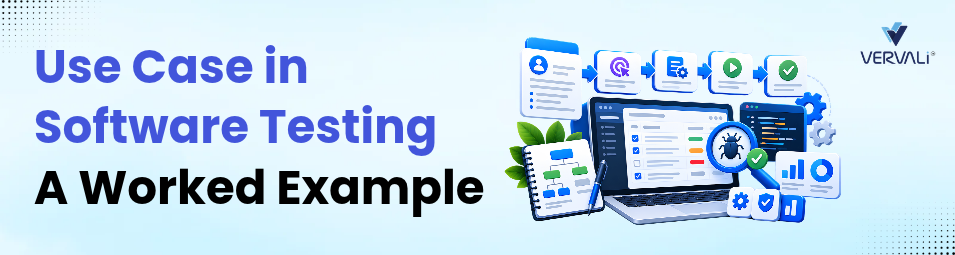
Use Case in Software Testing: How to Turn One Into Test Cases

Every path through a use case becomes at least one test case. A worked bank-transfer example shows the test table, and ISTQB's 2023 and 2025 syllabus changes explain…
By Sonal Jain 16 min read
Read more

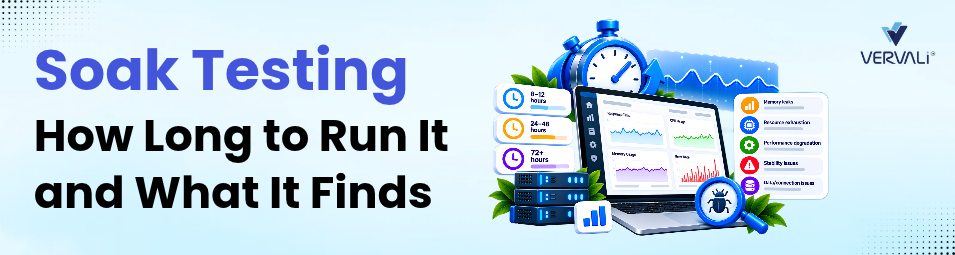
What Is a Soak Test? How to Run One and Read the Results

What a soak test is, how it differs from load, stress and spike tests, how long to run it, the metrics that decide a pass, and how JMeter, k6 and Gatling hold a load…
By Jagdish Gaikwad 17 min read
Read more

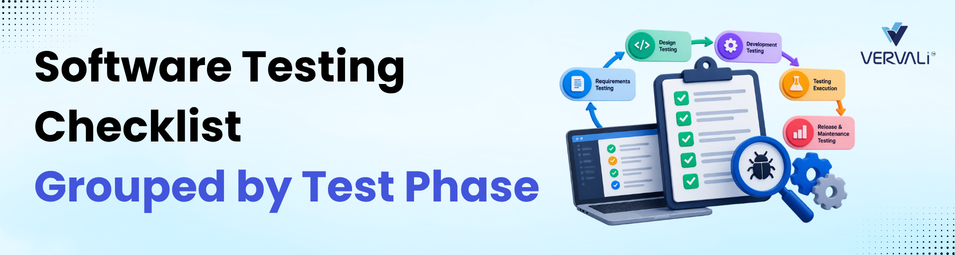
Software Testing Checklist: What Belongs on It, Phase by Phase

This software testing checklist groups every item by the phase of the test process it belongs to, marks the items teams routinely skip, and shows how to wire the lis…
By Jagdish Gaikwad 19 min read
Read more

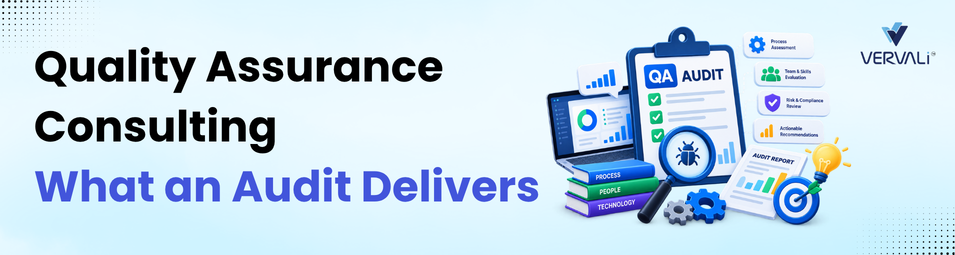
Quality Assurance Consulting: What a QA Maturity Assessment Actually Produces

This guide explains what a QA maturity assessment scores you against, what the deliverable looks like on the last day, and when advisory work is the wrong purchase.
By Jagdish Gaikwad 19 min read
Read more

Mobile App Testing Services in 2026: Devices, Store Rules and Cost

This guide explains what mobile app testing services cover, how to size a device matrix from United States traffic data, and what Apple and Google check before a rel…

By Jagdish Gaikwad 18 min read
Read more
new-blogs-right

Need Expert QA or
Development Help?

Our Expertise

contact
  • AI & DevOps Solutions
  • Custom Web & Mobile App Development
  • Manual & Automation Testing
  • Performance & Security Testing
contact-leading

Trusted by 150+ Leading Brands

contact-strong

A Strong Team of 275+ QA and Dev Professionals

contact-work

Worked across 450+ Successful Projects

new-contact-call-icon Call Us
721 922 5262

Collaborate with Vervali

EoR
Quality Assurance
Development
Cloud
Devops
Market Research