Use Case in Software Testing: How to Turn One Into Test Cases
Every path through a use case becomes at least one test case. A worked bank-transfer example shows the test table, and ISTQB's 2023 and 2025 syllabus changes explain…
Vervali tests airline and travel platforms end to end: booking engines and passenger service system integrations, check-in and boarding, loyalty and fare rules, payments and refunds, schedule-change and disruption handling, mobile applications, and behaviour under a sale or an irregular-operations spike. A major airline's booking and check-in platform reached 85% test coverage and 70% fewer customer-reported issues within two release cycles with our team.


ISO/IEC 17025:2017Accredited testing laboratory

CMMI Maturity Level 3The process is written down and repeats

ISO 9001:2015Quality management

ISO/IEC 27001Information security
Four failure points that turn into lost bookings, stranded passengers or a regulator's letter.
Bookings that pass a happy-path script and fail when the passenger service system is slow, halfway through payment.
Check-in, bag tags, status pages and the app telling different stories while a flight is delayed or cancelled.
Refunds, vouchers and change fees that fail months after the cancellation, long after the release went green.
Airline websites and apps that miss WCAG 2.0 AA, which 14 CFR 382.43 has required since 2015.
Find the booking failures before your passengers do.
Free Booking-Flow TestA defect here is a booking that never completes and a customer who books elsewhere.
Availability and pricing consistency between the engine and the passenger service system, seat and ancillary selection, hold and timeout behaviour, currency and tax, and the failure cases when the upstream system is slow rather than down. Those paths get the same functional and regression discipline as our application testing, tuned to airline and travel platforms.
The messages, the timeouts, the tax and currency rules, and what the passenger sees when the host disagrees with the web. That surface is your actual GDS, PSS, inventory and payment stack. After NDA we name those systems in the design, and if we have not tested that host before, we say so before we quote.
The passenger books with the competitor that still answered. Coverage on this path is the first thing we price, not an add-on after the happy path is green. We also test a fare that disappears between search and confirm, and a hold that expires mid-form.
Disruption is where airline software actually fails, and it is testable.
Online and mobile check-in, seat changes, baggage, boarding pass delivery and scanning. The airline engagement covered check-in. Disruption and rebooking go into your design whenever they are the risk, with the expected result agreed with your operations owner before execution.
A flight delayed, cancelled or reallocated, and every downstream system having to agree. The test is whether check-in, inventory, bag tags, status pages and the app still tell the same story when the host is slow, when a passenger is already at the airport, and when the call centre is taking the same request.
The highest-margin flows are also the most rule-dense, so this is where regression pays most.
Points accrual and redemption, tier logic and its edge cases, fare rules and change or cancel penalties, and ancillaries such as bags, seats and insurance. If loyalty is not in your first release, we still name it as a gap rather than pretend the happy path is the product.
We reconstruct the intended rule with your revenue owner when there is no spec, then test the failure cases: a tier that almost qualifies, a redemption that expires mid-booking, a change fee that should not apply after a schedule change you caused. Offers that no longer sell are retired so you are not paying to retest them.
A passenger who cannot pay is loud. A passenger who paid twice writes to a regulator months later.
Multi-currency payment, split and partial payment, vouchers, and the refund path, which is slower to notice and more expensive to get wrong than the payment path. Refunds and vouchers after a cancellation sit in the functional suite from the first release.
PCI DSS scope for a travel platform is the cardholder data you touch, what is tokenised, and the scripts on the payment page. We test those controls. Application and API attack work is scoped separately as security testing of agreed in-scope assets, and control-by-control evidence comes through our compliance testing.
Your next sale should not be the first real load test.
Talk to Our QA LeadThree load shapes, each modelled on its own in our performance testing. The airline engagement delivered 40% faster page loads once the slow paths were in the suite.
Predictable and concentrated. Model it from last year's own traffic, with the fare that will actually run, and the checkout path loaded, not only search. Search that stays up while payment dies is a failed sale, not a green report.
Unpredictable. It hits servicing rather than booking: reissue, notify, rebook. Test that path, not a second sale script. The host is busy and the passenger is already ticketed. Those are different bottlenecks.
Everything at once, while call centre volume spikes. The test is whether check-in, rebooking and status still agree when the host is slow. Model it from a real irregular-operations day, not from a round number of virtual users.
For airline websites this is a legal obligation with a date attached, not a quality argument.
Air carriers that operate at least one aircraft with more than 60 seats, and that own or control a primary website marketing air transportation to the general public in the United States, must make public-facing pages conform to WCAG 2.0 Level AA. Core services (booking, check-in, itinerary, status, frequent flyer, schedules, contact) had to conform by 12 December 2015; remaining pages by 12 December 2016.
ADA still matters for agencies, hotels and sites that are not the primary carrier website. We test with keyboard and a screen reader against WCAG 2.0 AA where 382.43 applies, and against the version your other buyers named, and we map which rule binds you in the design. Full audits, VPAT support and Title II guidance run through our ADA and Section 508 compliance testing.
The airline app is its own surface. A web booking that works does not prove the app.
Offline boarding passes, push tied to disruption, deep links from email into the app, and wallet integration. A passenger who only ever checks in on a phone will never see the desktop pass you tested, so core flows named in 382.43 are tested in the app whenever a passenger completes them there.
Device and version coverage follows our mobile application testing matrix, applied to these travel journeys. If a device is not in the lab, we say so in the design before we quote, rather than promising a matrix we cannot run.
How a major airline cut customer-reported issues within two release cycles.
Major airline · booking and check-in
Before: coverage on the booking and check-in platform was too thin for the release pace, customers reported issues testing had not seen, and pages were slow on the paths that sell seats. Vervali built a functional and regression suite around those paths, with automation on the stable journeys that sell seats and get passengers to the gate, and load on the servicing that was actually slow. Disruption experiments and one-off fare trials stayed manual. After two release cycles: 85% test coverage, 70% fewer customer-reported issues, and 40% faster page loads, with a regression suite running before every release.
85% test coverage 70% fewer customer-reported issues 40% faster page loads Two release cyclesFrom a first look at one booking flow to a suite that keeps pace with your releases, 9am to 1pm Eastern with delivery from India.
Share the Platform
Tell us the products in play (web, mobile, PSS, payments) and the paths that take money or fail a disruption, with staging access under NDA.

Get the Coverage Model
A first assessment is quoted after that look: the coverage model, the manual and automated split, and the load shapes that apply to your platform.

Start With One Booking Flow
A free test of one booking flow is the fastest first look at defect quality and cadence. If you already know the platform, a QA lead scopes the full engagement.

Keep It Current, Build What's Next
We keep the suite current as fares, apps and hosts change. Development comes second: the same team can build or extend booking, check-in, loyalty and servicing features through our development services, with testing inside every sprint.


OUR BLOGS

Every path through a use case becomes at least one test case. A worked bank-transfer example shows the test table, and ISTQB's 2023 and 2025 syllabus changes explain…
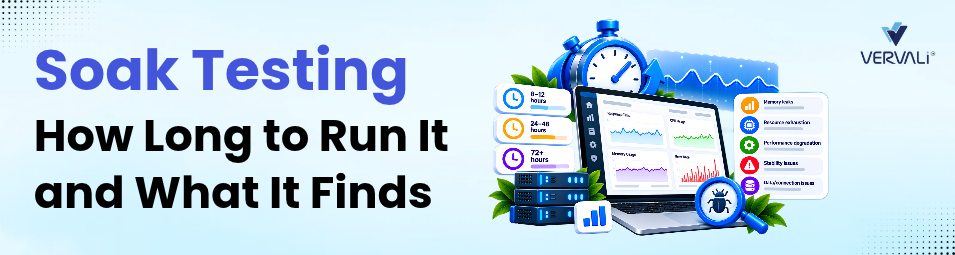
What a soak test is, how it differs from load, stress and spike tests, how long to run it, the metrics that decide a pass, and how JMeter, k6 and Gatling hold a load…
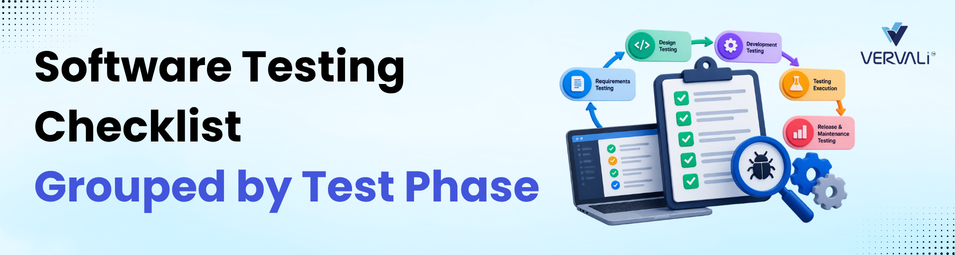
This software testing checklist groups every item by the phase of the test process it belongs to, marks the items teams routinely skip, and shows how to wire the lis…
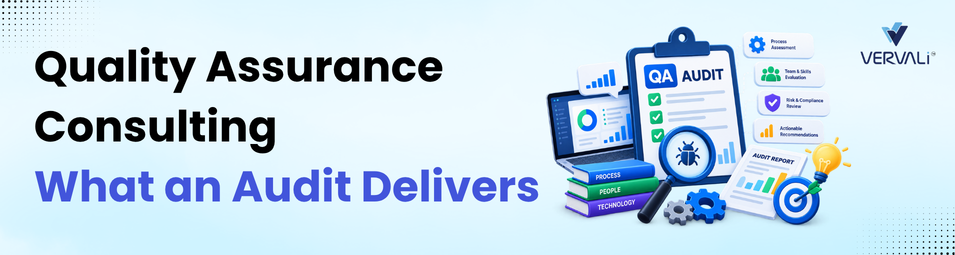
This guide explains what a QA maturity assessment scores you against, what the deliverable looks like on the last day, and when advisory work is the wrong purchase.
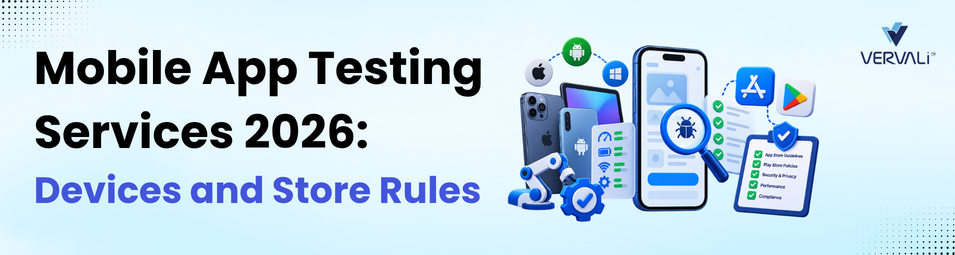
This guide explains what mobile app testing services cover, how to size a device matrix from United States traffic data, and what Apple and Google check before a rel…

This guide prices the five QA outsourcing engagement models against the cost of an in-house hire, and names the situations where outsourcing is the wrong call.

This article ranks nine software testing companies on their verified review evidence and engagement floors, and sets out the criteria before the ranking.

A ranked comparison of ten IT staff augmentation vendors on verified Clutch data, with the ranking criteria stated before the list. Covers why the highest-rated firm…

Our Expertise


Trusted by 150+ Leading Brands

A Strong Team of 275+ QA and Dev Professionals

Worked across 450+ Successful Projects
 Email Us
 Call Us
From flawless code to flawless quality - we design, develop, and test digital solutions that deliver real results.