Use Case in Software Testing: How to Turn One Into Test Cases
Every path through a use case becomes at least one test case. A worked bank-transfer example shows the test table, and ISTQB's 2023 and 2025 syllabus changes explain…
Vervali tests the infrastructure your application runs on: servers and operating systems, network devices and segmentation, firewall and access rules, cloud configuration and identity permissions, and the exposed services an attacker would find first. Findings are risk-ranked with a remediation path, and every engagement ends with a retest of the agreed in-scope assets.


ISO/IEC 17025:2017Accredited testing laboratory

CMMI Maturity Level 3The process is written down and repeats

ISO 9001:2015Quality management

ISO/IEC 27001Information security
Servers, network devices, cloud configuration and the things nobody patched: the layer your application runs on, not the application itself.
Missing patches, default accounts, services that should not be listening, and configuration that still matches last year's build image. A finding looks like an unauthenticated service on an internal host, or a kernel that has been public for months. We check the agreed in-scope servers, not a neighbour you did not name.
Whether the diagram still matches the traffic. Routing, VLAN and trust boundaries, management planes left on the production network. A finding looks like a jump from a guest VLAN into a payment segment, or a device still using a community string from the install guide.
Rules that were temporary and became permanent, any-any leftovers, and admin paths that should not be reachable from the internet. A finding looks like an old port still open for a vendor who left, or remote desktop on a host that was supposed to sit behind a jump box.
IAM sprawl, public storage, security groups that drifted, and logging that is off on the account that matters. A finding looks like a bucket readable from the internet, or a role that can assume more than the ticket said.
What answers on the public surface of the agreed in-scope assets: VPN, mail, remote access, forgotten admin panels, and development hosts that still have a DNS name. A finding looks like a staging login on the internet, or a service banner that still names the version.
Find the unpatched host before an attacker does.
Free Exposure CheckInfrastructure testing is the network and host layer of the security offer. Pick the scope that matches the problem you have.
The problem is servers, segmentation, firewalls, cloud IAM and the services that answer on the internet. You want those agreed in-scope assets tested, a risk-ranked report and a retest. For deeper device, VPN and traffic review, pair it with network security testing.
You need an authorised attacker across the application, API, mobile and infrastructure, with controlled exploitation inside agreed limits. That is our penetration testing and VAPT engagement, part of the wider security testing offer. We do not bill both for the same week unless you asked for both.
Most infrastructure now lives in cloud configuration, so that is where most of these findings come from.
IAM sprawl, stale keys and roles that can assume more than the ticket said, on the agreed in-scope accounts. We say what we checked and what each finding looks like, so the owner can close it without a second meeting.
Public buckets, snapshots shared too widely, and security groups that drifted from the design. A finding looks like a storage path readable from the internet, or a database port open to any address.
Logging that is off on the account that matters. HIPAA, PCI DSS and SOC 2 readiness evidence is a separate engagement under cloud security and compliance. Vervali tests a client's systems for SOC 2 readiness and is not itself SOC 2 certified.
A scan finds candidates. A person confirms each one before it becomes a finding.
What answers on the agreed in-scope assets, from the outside and from the segments you named. OpenVAS and Tenable widen the first pass. Wireshark is for the traffic that the diagram said should not exist.
Every high and critical is confirmed by a person before it is a finding. False positives stay out of the report. That is the step a weekend scan skips, and the step an engineer will actually trust.
Metasploit and manual follow-up only inside the agreed limits. Proof that the path is real, not a smash of production. If a step would take a service down, we stop and write what we would have done.
One report for three readers: engineers who fix, leaders who set the order, and auditors who check scope.
Risk-ranked with a stated basis, the reproduction, the evidence and the remediation path. Enough for an engineer to fix it without asking what the scanner meant.
A short summary that names the two or three things that would actually cause harm, so a CISO does not have to mine a 60-page appendix. A critical finding is never buried on page 47 because the scanner numbered it that way.
An auditor gets a list that maps to the agreed in-scope assets. Recovery of backups and failovers is a separate check through disaster recovery testing.
Every engagement ends with a retest of the agreed in-scope assets, included in the original work.
Schedule it once your owners say the fixes are in. Findings are revalidated after your team fixes them, and the retest is part of the original work rather than a second sale.
Every agreed in-scope asset from the first pass is checked again, with a pass or fail on each finding. If a new release changes the surface, that is a new scope, not a free extension of the last one.

OUR BLOGS
Every path through a use case becomes at least one test case. A worked bank-transfer example shows the test table, and ISTQB's 2023 and 2025 syllabus changes explain…
What a soak test is, how it differs from load, stress and spike tests, how long to run it, the metrics that decide a pass, and how JMeter, k6 and Gatling hold a load…
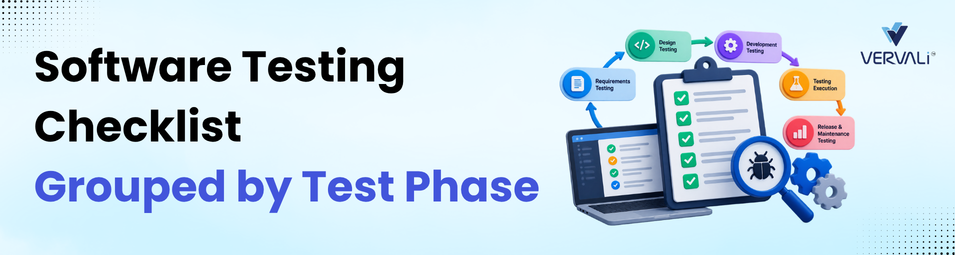
This software testing checklist groups every item by the phase of the test process it belongs to, marks the items teams routinely skip, and shows how to wire the lis…
This guide explains what a QA maturity assessment scores you against, what the deliverable looks like on the last day, and when advisory work is the wrong purchase.
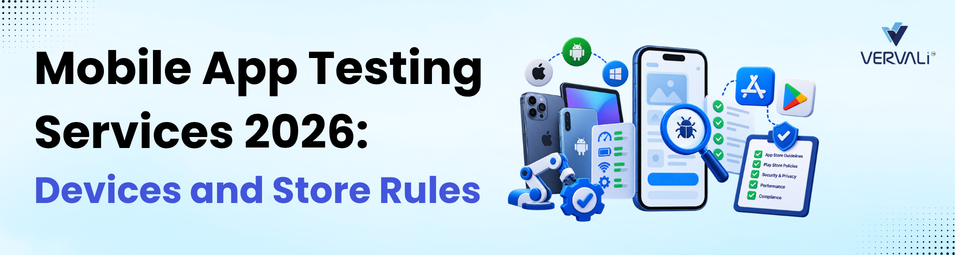
This guide explains what mobile app testing services cover, how to size a device matrix from United States traffic data, and what Apple and Google check before a rel…

This guide prices the five QA outsourcing engagement models against the cost of an in-house hire, and names the situations where outsourcing is the wrong call.
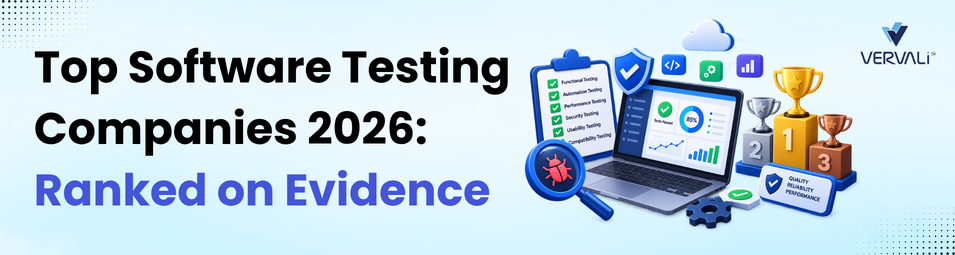
This article ranks nine software testing companies on their verified review evidence and engagement floors, and sets out the criteria before the ranking.

A ranked comparison of ten IT staff augmentation vendors on verified Clutch data, with the ranking criteria stated before the list. Covers why the highest-rated firm…

Our Expertise


Trusted by 150+ Leading Brands

A Strong Team of 275+ QA and Dev Professionals

Worked across 450+ Successful Projects
 Email Us
 Call Us
From flawless code to flawless quality - we design, develop, and test digital solutions that deliver real results.