Use Case in Software Testing: How to Turn One Into Test Cases
Every path through a use case becomes at least one test case. A worked bank-transfer example shows the test table, and ISTQB's 2023 and 2025 syllabus changes explain…
Vervali runs ADA and Section 508 compliance testing for US websites, web applications and mobile apps: a WCAG 2.2 AA audit of the pages and flows that carry legal risk, remediation guidance your developers can act on, retesting, and VPAT support. A US public-sector HR software provider reached Section 508 certification on the first attempt with us, across 2,000+ URLs, inside 90 days.
Need hands-on testing with NVDA, JAWS, VoiceOver and TalkBack inside your sprints? See our accessibility testing services.


ISO/IEC 17025:2017Accredited testing laboratory

CMMI Maturity Level 3The process is written down and repeats

ISO 9001:2015Quality management

ISO/IEC 27001Information security
Know which obligation governs the product, what evidence buyers expect, and when action is due. Title II dates come from the Department of Justice Interim Final Rule, Federal Register document 2026-07663; the standard remains WCAG 2.1 AA.
For state and local government websites, mobile apps and contracted digital services. We audit the public journeys against WCAG 2.1 AA, provide developer-ready remediation guidance and retest fixes before the applicable deadline: 26 April 2027 for entities serving 50,000 or more people, and 26 April 2028 for smaller entities and special districts.
For public-facing websites operated by places of public accommodation, including retail, hospitality and service businesses. Because Title III has no Department of Justice web standard or deadline, we test high-risk customer journeys to WCAG 2.2 AA, prioritise barriers, guide remediation and provide a dated retest record that helps reduce litigation exposure.
For federal agencies and vendors supplying information and communication technology. We test the product against the Revised Section 508 Standards, including WCAG 2.0 Level A and AA, verify it with assistive technology, retest remediation and prepare the evidence needed for an accurate VPAT and Accessibility Conformance Report.
Some states add their own rules on top of the ADA. California's Unruh Act is the one most often cited alongside Title III. We test to the WCAG version your governing rule names, and we audit to WCAG 2.2 AA so a Title II or Title III buyer is not starting from a lower bar. We are not your counsel. The audit is evidence. A lawyer reads the statute.
Need the pages that carry legal risk audited before the deadline?
Scope follows legal exposure and public use, not raw URL count. Critical flows, shared templates, documents and media are tested to WCAG 2.2 AA.
Home, sign-in, the task the public actually completes, search, forms, checkout or application, account, and the templates those pages share. Chosen from analytics, legal exposure and what a first-time user has to finish. The rest of the site is represented by those templates, not ignored and not billed URL by URL.
Perceivable: text alternatives, captions, contrast. Operable: keyboard, focus, enough time, no traps. Understandable: labels, errors, predictable behaviour. Robust: markup a screen reader can parse. We do not dump 50 success criteria as a numbered list. We report what a person cannot do.
Real screen readers, not only a scanner. Documents, PDFs and media in the sample, including captions and audio description. That is the part most audits quietly skip and most complaints cite. If a PDF or a video is in the public flow, it is in the audit.
Related reading: accessibility testing services in 2026, is my website ADA compliant, and ADA compliance for billing and payment portals.
Leadership sees exposure and priorities. Developers receive reproducible findings, dependencies and an ordered remediation path they can execute.
Severity, the WCAG criterion it fails, where it occurs, what to change, and a code-level example. Reproduction a developer can follow. The same finding on twenty pages of one template is one finding with a list of instances, not twenty tickets.
Which fixes unblock others, so you do not start on a low-severity colour when a keyboard trap is still live. A remediation path ordered by legal exposure rather than by page: the public task first, then the rest of the template, then documents and media. Format: a working sheet the team can import, plus a short summary a procurement or legal reader can take into a meeting.
Procurement receives an ACR backed by current test evidence, not a completed template with no audit behind it. We test and draft; you sign.
A Voluntary Product Accessibility Template is the ITI form used to report how an ICT product maps to accessibility standards. Buyers ask for it in RFPs. Filling the form without testing is how VPATs get thrown out.
An Accessibility Conformance Report is the completed VPAT: the product, the standard, the results, and the remarks. That is the document procurement files. We draft it from the current ITI edition used in US federal procurement, against the testing we actually ran.
The vendor signs the ACR, not the tester. Vervali supplies the testing, the evidence and a draft. We do not sign as if we were the product owner. That line is what keeps a VPAT honest when a contracting officer reads it.
A fix is closed only after retesting. The resulting pass or fail record gives procurement and certification teams evidence they can rely on.
Each finding is retested after your developers fix it. The record is pass or fail against the same criterion and location, with a date. That is the file you hand to procurement or to a certification body. We do not close a finding on a screenshot of a patch.
The product is ready when the in-scope findings are retested and the remaining gaps are written down, not hidden. On the public-sector HR engagement, Section 508 certification landed on the first attempt, inside the committed 90 days, and a product that had been out of scope was remediated as well. That is the outcome this section is for.
A large public-sector HR platform moved from 5,000+ identified gaps to Section 508 certification on the first attempt, inside 90 days.
USA · public-sector HR software · NEOGOV
Before: the client needed Section 508 certification to sell to federal buyers, across a large public-sector HR suite, on a committed 90-day clock. Vervali audited 2,000+ URLs, found and fixed 5,000+ gaps, and retested. After: Section 508 certification on the first attempt, inside the 90 days, and a product that had been outside the agreed scope was remediated as well. What the client could then do that they could not before: sell to federal buyers.
2,000+ URLs audited 5,000+ gaps fixed Section 508, first attempt, 90 days WCAG 2.0 · Section 508Fixed scope follows unique templates, critical flows and required evidence, not every URL. Typical ongoing work starts at $25 to $49 per hour.
The price moves with four things: how many unique templates the public flows reduce to, whether mobile apps and documents are in scope, whether remediation testing is included, and whether a VPAT is required. Ongoing work is $25 to $49 per hour. A compliance audit is quoted as a fixed price against that sample, not as an open hourly run. A free 10-page WCAG 2.2 AA spot audit, with a report in three business days, is the first look. A named start is usually inside a week of NDA and access. A full audit typically takes two to four weeks once that access is in place, longer when documents, media and a second product are in the same scope.

OUR BLOGS
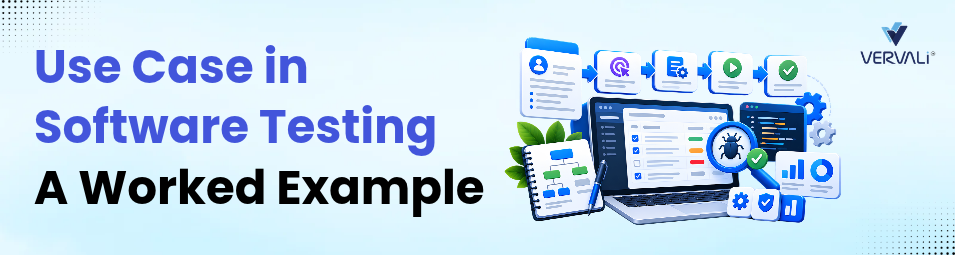
Every path through a use case becomes at least one test case. A worked bank-transfer example shows the test table, and ISTQB's 2023 and 2025 syllabus changes explain…
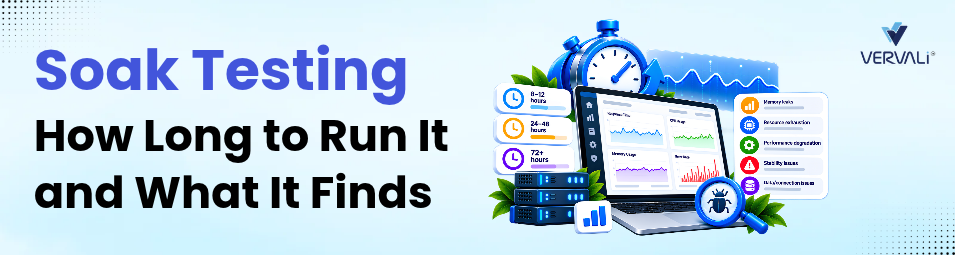
What a soak test is, how it differs from load, stress and spike tests, how long to run it, the metrics that decide a pass, and how JMeter, k6 and Gatling hold a load…
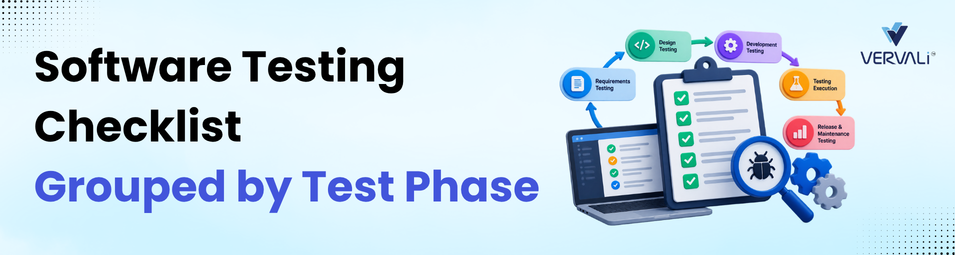
This software testing checklist groups every item by the phase of the test process it belongs to, marks the items teams routinely skip, and shows how to wire the lis…
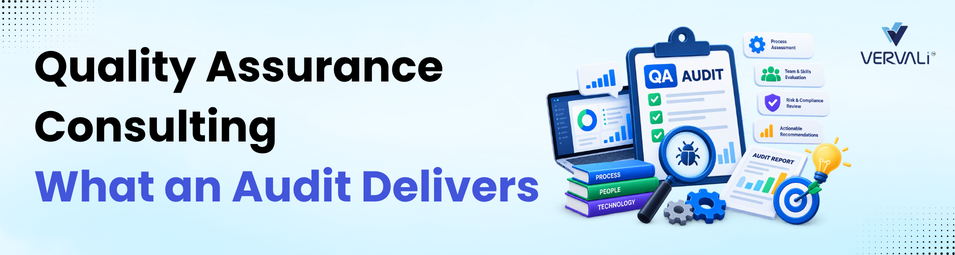
This guide explains what a QA maturity assessment scores you against, what the deliverable looks like on the last day, and when advisory work is the wrong purchase.
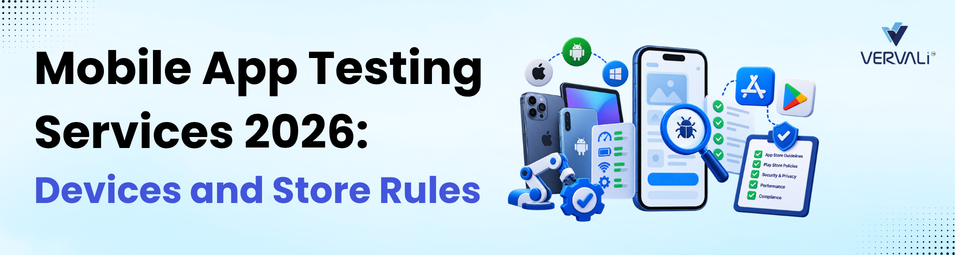
This guide explains what mobile app testing services cover, how to size a device matrix from United States traffic data, and what Apple and Google check before a rel…

This guide prices the five QA outsourcing engagement models against the cost of an in-house hire, and names the situations where outsourcing is the wrong call.
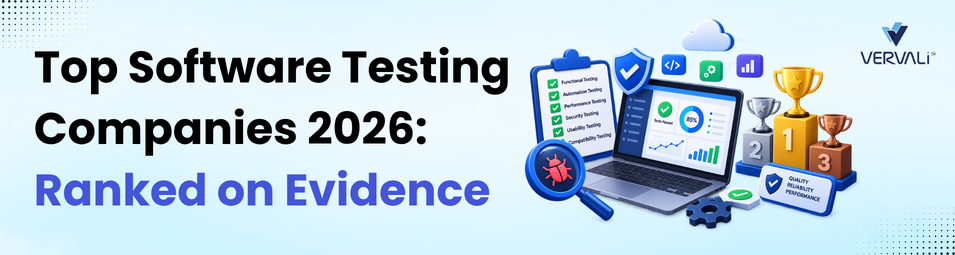
This article ranks nine software testing companies on their verified review evidence and engagement floors, and sets out the criteria before the ranking.
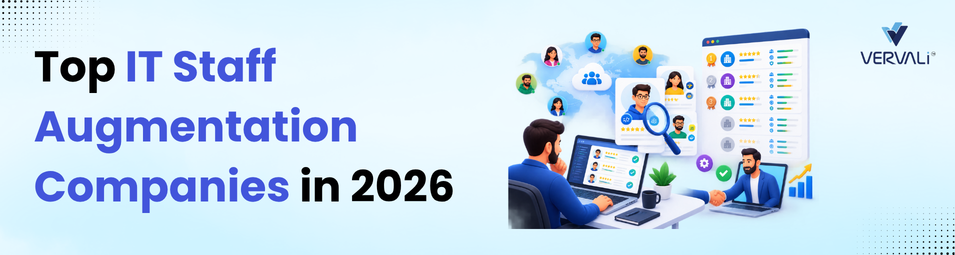
A ranked comparison of ten IT staff augmentation vendors on verified Clutch data, with the ranking criteria stated before the list. Covers why the highest-rated firm…

Our Expertise


Trusted by 150+ Leading Brands

A Strong Team of 275+ QA and Dev Professionals

Worked across 450+ Successful Projects
 Email Us
 Call Us
From flawless code to flawless quality - we design, develop, and test digital solutions that deliver real results.